Fishin' Frenzy Tips: Separating Sense from Nonsense
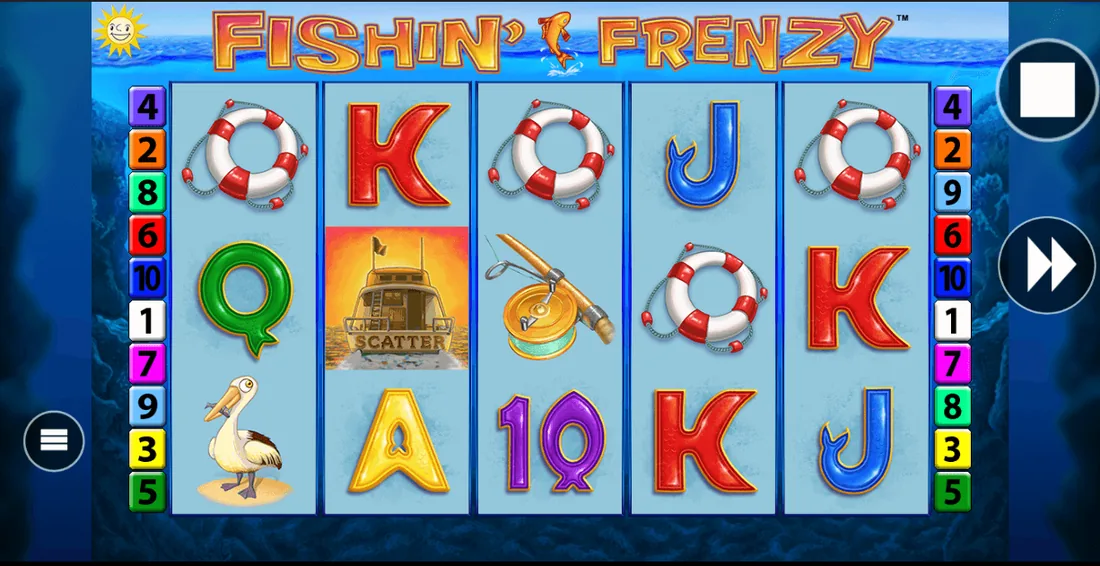
A mate once told me he'd «cracked» Fishin' Frenzy. His method: wait 50 spins after someone else had won big, then jump in with maximum stake because the game was «due». He burned £200.00 in eleven minutes and never saw the free spins round. The game hadn't been holding back. It had been doing exactly what it always does: generating outcomes with a random number generator that has no memory and no conscience.
Every slot runs on RNG. That means no pattern, no cycle, no temperature. Yet the internet brims with «strategies» that treat Fishin' Frenzy like a puzzle to solve rather than a game of chance with a house edge. This guide won't promise you wins. It will show you what you can control, what you can't, and how to avoid the mistakes that turn a casual session into an expensive regret.
Why «Strategies» Built on Patterns Are Built on Nothing
Blueprint Gaming's Fishin' Frenzy uses certified RNG software audited to UKGC standards. Every spin is independent. The outcome of spin 742 has zero influence on spin 743. This isn't marketing spin — it's maths enforced by the regulator whose licence number sits in every operator's footer. You can look the operator up in the UKGC public register and verify it yourself.
Yet players still chase phantom patterns. The most popular myths:
- «Hot and cold streaks» — RNG doesn't warm up or cool down. A ten-spin losing run doesn't mean a win is «due». Probability resets every spin.
- «Time the feature» — free spins trigger on scatter symbols. Whether it's been 20 spins or 200 since the last feature makes no difference to the next outcome.
- «Watch other players» — what someone else wins or loses has zero bearing on your results. Each account, each session, each spin is isolated.
- «Demo behaves differently» — demo mode and real-money mode run the same RNG and the same RTP. The only difference is you're not risking actual money.
These myths survive because human brains are wired to spot patterns, even in randomness. Slots exploit that wiring. The flashing reels, the near-misses, the sound design — it all reinforces the illusion of control. But the maths doesn't care what you believe.
The Three Levers You Actually Control
You can't influence the RNG. You can influence your exposure to it. That comes down to three decisions: how much you stake per spin, when you stop, and which mode you choose.
Deposit limits are mandatory on every UKGC-licensed operator. Set them before your first deposit. You can also set session time reminders and loss limits within your account settings. These aren't nanny-state rules — they're tools. Use them.
Volatility Isn't Your Enemy Until You Ignore It
Fishin' Frenzy is medium-volatility. That means you'll see a mix of small wins, dry spells, and occasional big hits from the free spins feature. Compare that to high-volatility games, where you can go 200 spins without a meaningful win, or low-volatility games that drip-feed small returns but rarely deliver headline multipliers.
Medium volatility sounds balanced, but it still produces losing streaks. The 96.12% RTP is a long-term theoretical average across millions of spins. In a single session of 100 spins, your return could be 40% or 150%. Variance swings wide in the short term. That's not the game «cheating» — that's probability doing its job.
Where players go wrong: they fund their session for best-case outcomes, not realistic ones. If you bring £20.00 and stake £1.00 per spin, you have 20 spins of runway. If the feature doesn't hit in that window — and there's no guarantee it will — you're out. Medium volatility demands a buffer. Budget for at least 50 to 100 spins to give yourself a reasonable sample size.
The free spins round is where most of the variance lives. Three or more scatter symbols trigger the feature, and the fisherman symbol collects the cash values on the fish during free spins. A strong feature can return 50x to 100x your stake. A weak one might return 5x. You can't control which you get. You can control whether your bankroll survives long enough to see it.
The Expensive Habits
Certain mistakes show up again and again. They're expensive because they compound. Here's what to watch for:
- Chasing losses with bigger stakes. You lose £30.00 at £0.50 per spin, so you jump to £2.00 per spin to «win it back faster». This accelerates your losses, not your recovery. The RTP doesn't improve. Your risk does.
- Playing on credit. Credit cards have been banned for gambling in the UK since 2020. If you're using a debit card, make sure the funds are yours. Gambling with borrowed money — even a loan from a mate — turns entertainment into debt.
- Ignoring the first withdrawal delay. KYC checks happen before your first withdrawal. Operators need proof of identity and address. That takes 24 to 48 hours, sometimes longer. Players who expect instant cashouts get frustrated and reverse the withdrawal to keep playing. That's how winnings evaporate.
- Skipping demo mode. You wouldn't test-drive a car by buying it. Demo play costs you nothing and shows you exactly how the game behaves. If the pace feels too fast or the swings too sharp, you've learned that without risking a penny.
- Misunderstanding bonus wagering. If you take a welcome offer — common examples on the UK market include matched deposits or free spins — you'll face wagering requirements, typically 30x to 50x the bonus amount. That means a £10.00 bonus requires £300.00 to £500.00 in total stakes before you can withdraw winnings. Read the terms. If it feels like a trap, it might be one.
How to Frame a Session Properly
A session without boundaries is a session that drifts into regret. Here's a framework that works:
| Step | Action | Why It Matters | |
|---|---|---|---|
| Set a loss limit | Decide the maximum you're willing to lose — for example, £30.00 — and stop when you hit it. | Losses are guaranteed in the long run due to house edge. A limit caps the damage. | → |
| Choose your stake | Divide your budget by the number of spins you want. £30.00 ÷ 60 spins = £0.50 per spin. | This gives you runway to see multiple features and absorb variance without going bust early. | → |
| Set a win target | Pick a win amount that feels meaningful — maybe 2x your starting balance — and walk away if you hit it. | Winning sessions are rare. Protecting them is rarer. Lock in the win before variance takes it back. | → |
| Use the clock | Set a timer for 20 or 30 minutes. When it goes off, finish your current round and assess. | Time pressure clouds judgement. A timer creates a neutral stopping point. | → |
If you're using a UKGC-licensed site, check that the operator is listed in the public register and that the licence number in the footer matches. Every legitimate operator serving British players needs a remote licence. If the details don't match, you're on an unlicensed site, and your deposits have zero consumer protection.
One more thing: GAMSTOP. If you've ever felt that gambling is taking more than it gives, one registration blocks every UKGC-licensed site for six months to five years. It's free, it's immediate, and it's anonymous. BeGambleAware also offers support if you need to talk it through. There's no shame in stepping back.
FAQ
Does the 96.12% RTP mean I'll get £96.12 back for every £100.00 I stake?
No. RTP is a long-term theoretical average calculated over millions of spins. In a single session, your return could be £20.00 or £180.00. Short-term variance swings wide. RTP only becomes visible across a huge sample size, far beyond what any individual player will ever see. It tells you the house edge (3.88% in this case), but it doesn't predict your next session.
Is there a difference between demo play and real-money play on Fishin' Frenzy?
No. Both modes run the same RNG and the same RTP. The maths doesn't change. The only difference is that demo play uses virtual credits, so you can't withdraw winnings, but you also can't lose real money. Demo mode on UKGC sites is usually available once you've logged in and passed age verification. Use it to understand the game's pace and volatility before staking real funds.
Can I time the free spins feature by watching how long it's been since the last one?
No. The free spins round triggers when three or more scatter symbols land, and every spin's outcome is determined by RNG with no memory of previous results. Whether it's been 10 spins or 300 spins since the last feature has zero influence on the next spin. «Timing» strategies are illusions. The game doesn't operate on cycles or quotas.
Will affordability checks stop me from playing if I deposit more than £150.00 a month?
Not immediately. Affordability checks start from £150.00 net deposits a month, using credit-reference data at the first stage. If the operator can't verify affordability through soft checks, they'll ask for evidence of income — payslips, bank statements, tax returns. This is UKGC licence compliance, not a personal judgement. If you can't provide evidence, the operator may restrict deposits or close your account. It's designed to prevent harm, not to punish recreational play.